Spend reserved, then reconciled
Estimated provider costs are reserved before each request and reconciled afterward, so proposals stay inside permissions and spending limits.
An AI growth team for solo founders.

Demo workspace with an example business. Switch to System to see the architecture.
Distrove helps solo founders, agencies and service businesses move from understanding their market to preparing and executing a growth plan. It combines business analysis, market research, channel selection, prospect discovery, content creation and follow-up in one workspace, covering four roles: strategist, researcher, sales rep and copywriter.
I lead Distrove as founder and product owner.
The browser manages the interface and calls server actions. The server validates requests, talks to providers and keeps state in SQLite. Background workers prepare recurring research, prospect batches, content and scheduled actions.
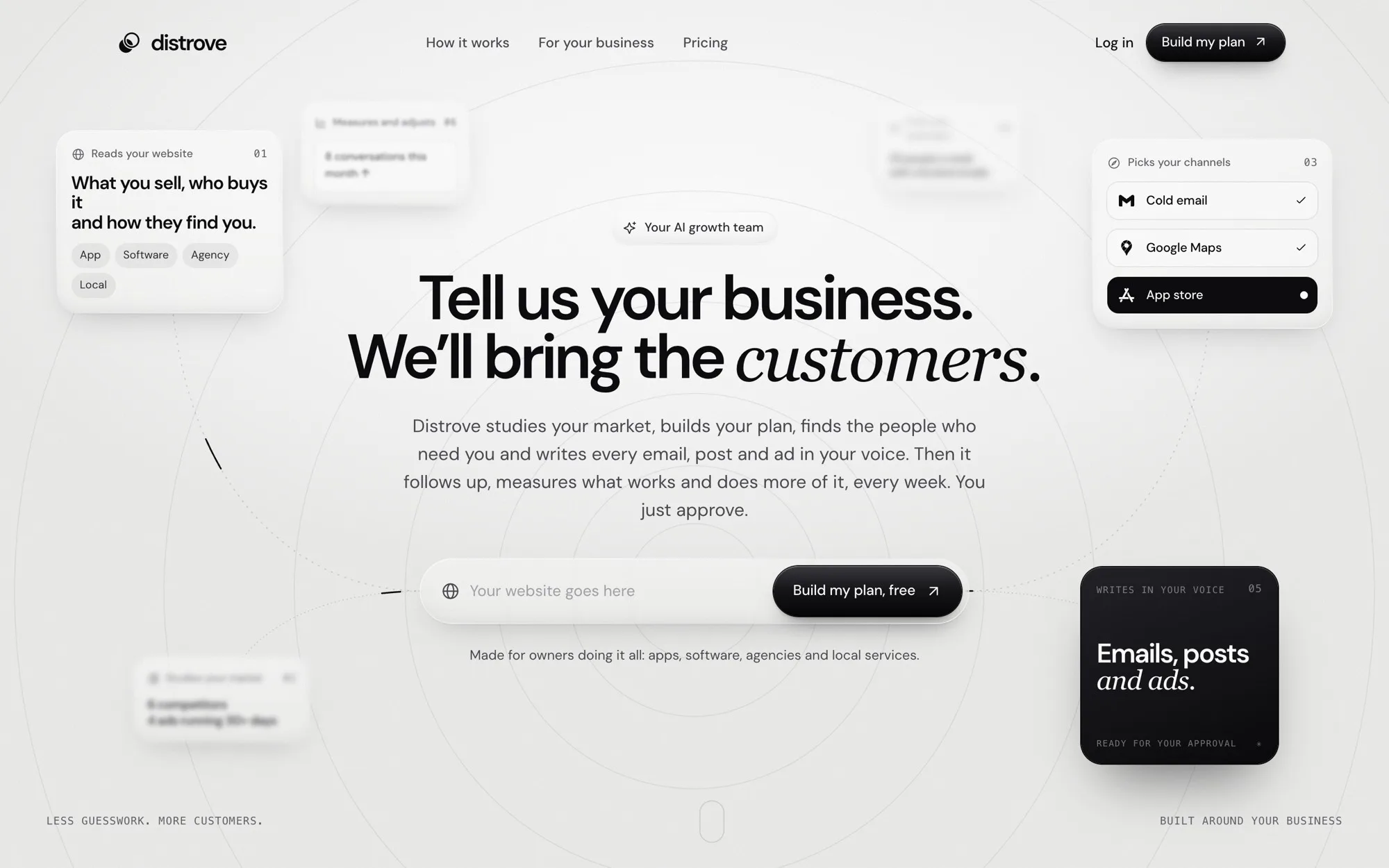
Reads the website, records its sources and drafts a business profile. The founder confirms it and adds goals, customer value, buying process and past marketing attempts.
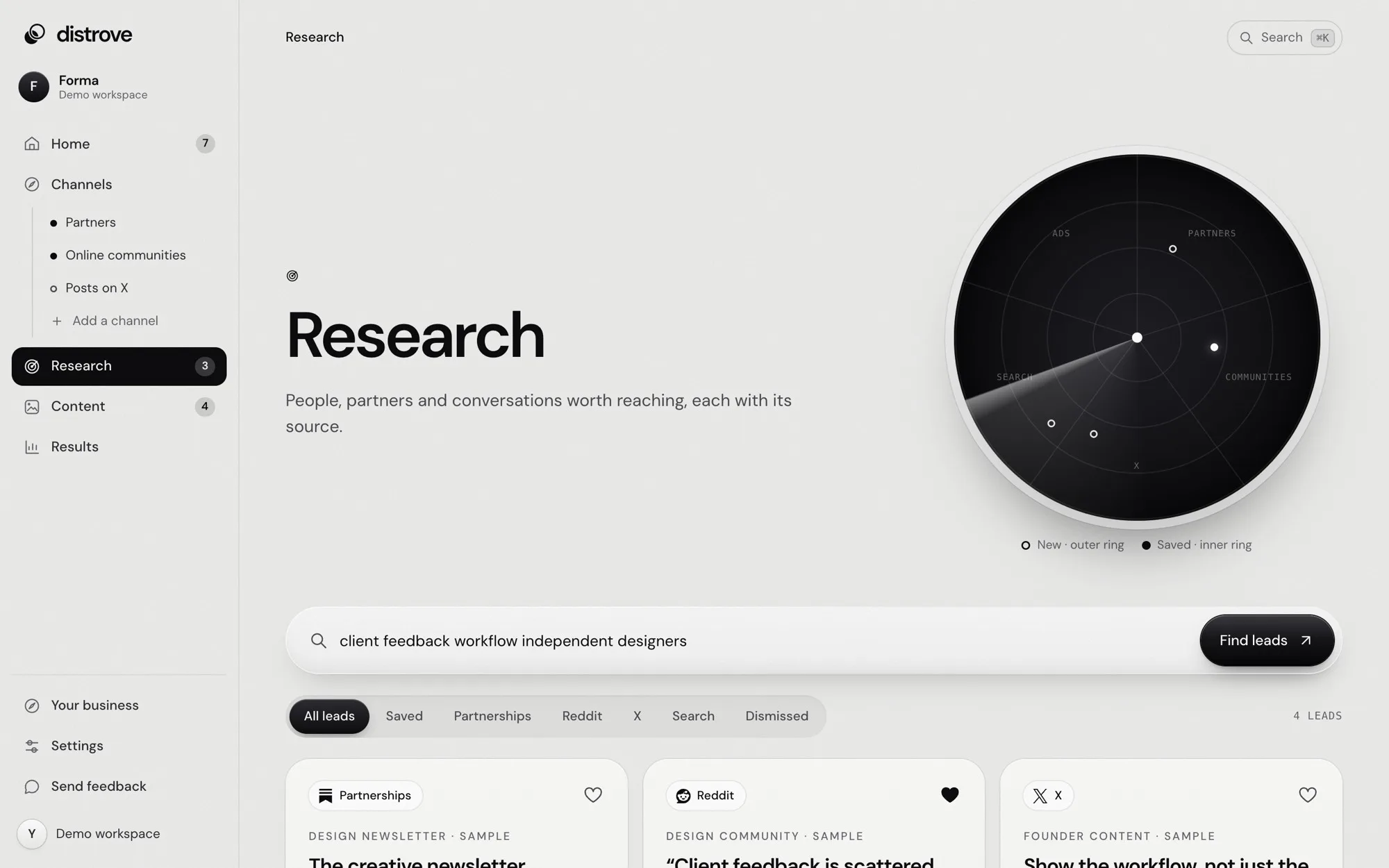
Studies competitors, customer discussions and published growth stories from comparable businesses.
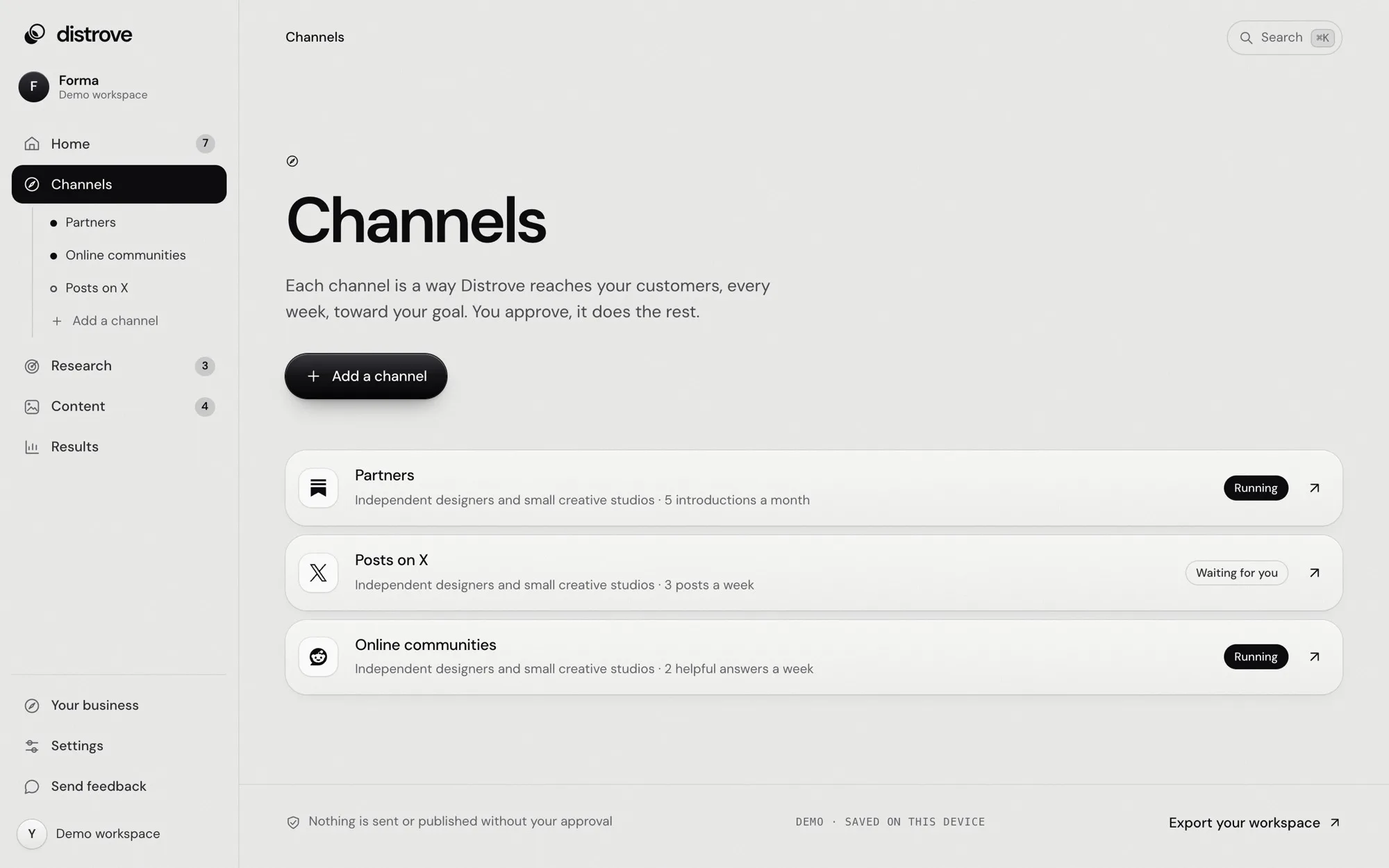
Weighs channels against the business context and cited evidence, explains the recommendation, then a second AI review can challenge or revise the plan.

Finds prospects, checks email addresses and writes personal outreach, follow-ups, posts and channel-specific material.
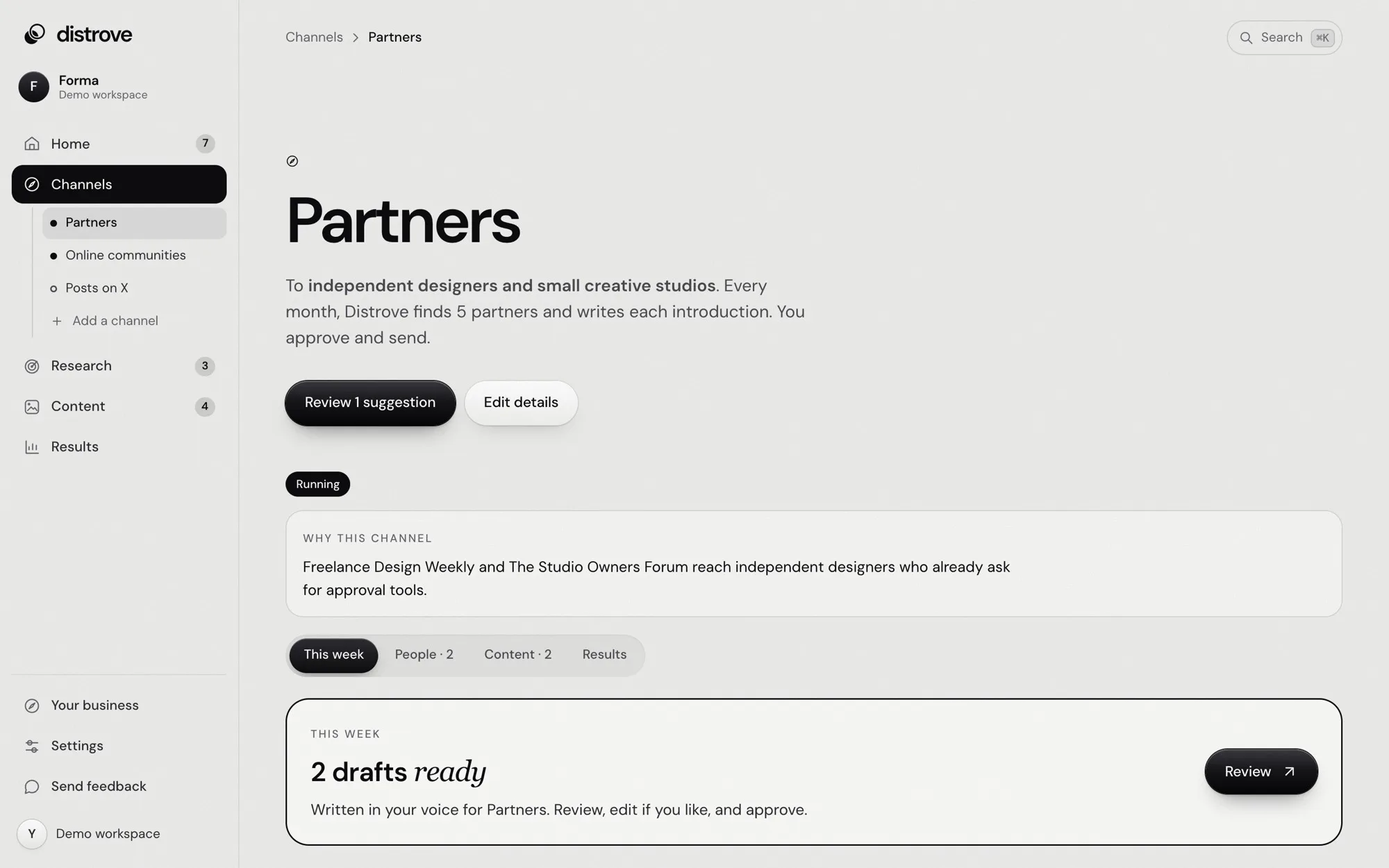
The founder approves every outward action. Connected workflows send or publish; other channels get prepared material for manual execution.
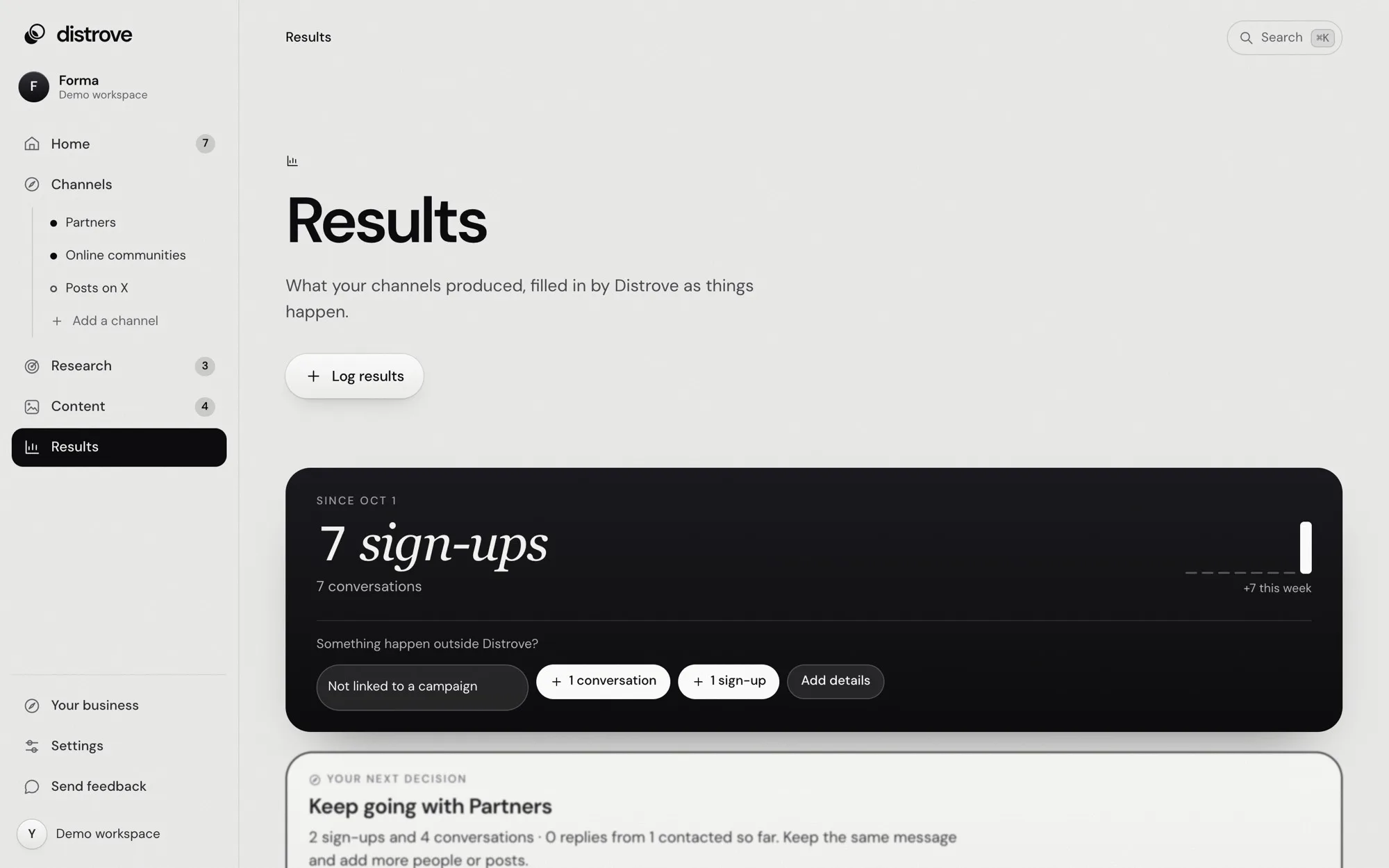
Records replies, meetings and reported outcomes, and keeps the learnings for the next review.
The details that make the workflow dependable in practice.
Estimated provider costs are reserved before each request and reconciled afterward, so proposals stay inside permissions and spending limits.
AI responses use structured output with server-side validation, and evidence references are checked before they reach the founder.
A database lease coordinates background work across several application instances, and provider failures have explicit handling.
Batch approval, paced delivery in sending windows, threaded follow-ups, reply matching with AI classification, pause controls and bounce handling.
X publishing runs through OAuth. LinkedIn outreach is prepared for the founder to send by hand, and community research drafts replies for review.
Stored connection credentials are encrypted, and sessions are kept on the server.
OpenAI Responses API: a stronger model for strategy and writing, a lighter one for bulk extraction and classification, and image generation.
Structured output, validated on the server before anything is stored or shown.
Recommendations cite their sources and the references are checked. A shared library of researched public growth stories is reused across analyses.
Generated proposals remain subject to the founder’s permissions, approvals and spending limits.
Node.js test runner with isolated fixtures and mocked external providers.
The thinking behind the architecture and the product experience.
The founder approves every outward action. Connected workflows send or publish only what was approved; other channels get material prepared for manual execution.
Channels are judged on the founder’s answers, cited market evidence and six criteria, then a separate skeptic pass can challenge or revise the plan.
What a business should do is decided separately from what the product can execute, so recommendations aren’t bent toward built-in features.
Early rules based on business type could push recommendations toward generic channels, including cold email for a self-serve product. I revised the strategy engine to weigh the founder’s answers, cited market evidence, six evaluation criteria and a separate skeptic pass. Recommendations now explain their basis, and a shared library of researched growth stories gives future analyses reusable evidence without repeating the extraction.
Live product under active development. Business analysis, research, strategy, prospecting, content, the mailbox workflow and measurement are implemented.